
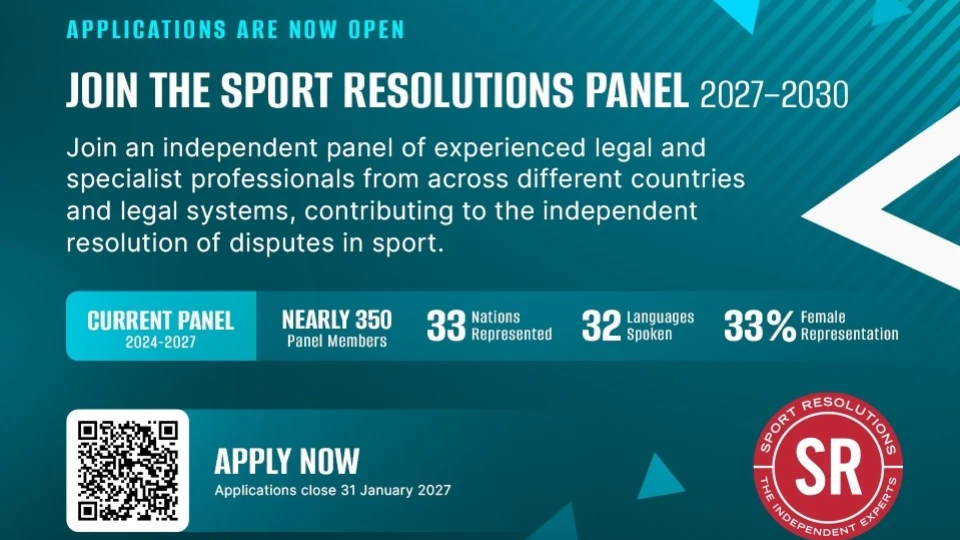
Sport Resolutions opens applications for its 2027–2030 Panel
Sport Resolutions is pleased to announce that applications are now open for its 2027–2030 Panel, with applications welcomed from suitably qualified professionals from around the world
Thu, December 20, 2018
To optimise for archiving, the original image and related documents associated with this article have been removed.
The IAAF Doping Review Board has approved an updated version of the Guidance Note for Authorised Neutral Athlete (ANA) status applications under IAAF Competition Rule 22.1A. Athletes who were granted ANA status in 2018 are able to re-apply for eligibility in 2019 by completing a simplified application form.
IAAF President Sebastian Coe commented: “As Taskforce chairperson Rune Andersen reported to Council on 4 December, RusAF continue to work hard at reforming Russian track and field, but two of the verification criteria have not yet been met. So that we can continue to safeguard the interests of clean athletes worldwide, we have today issued updated guidelines for Russian athletes seeking authorised neutral status to compete internationally next year.”
The IAAF reported earlier that after the publication of the guidelines and application form in December 2017, the world’s athletics body received more than 200 applications from Russian athletes. A total of 73 Russian athletes were declared eligible to compete as authorized neutral athletes in 2018. 68 applications were denied and 6 athletes had their ANA status revoked. A number of further applications have been withdrawn or were submitted out of time.
For more information visit the IAAF website here.
Sport Resolutions is pleased to announce that applications are now open for its 2027–2030 Panel, with applications welcomed from suitably qualified professionals from around the world
A decision in the case of the International Tennis Integrity Agency against Ms Jessica Eudovic has been issued by the Independent Tribunal
A peer-reviewed study by the International Testing Agency has confirmed that short-distance drone transport can preserve the integrity of anti-doping samples while significantly reducing transport times compared with road transport