
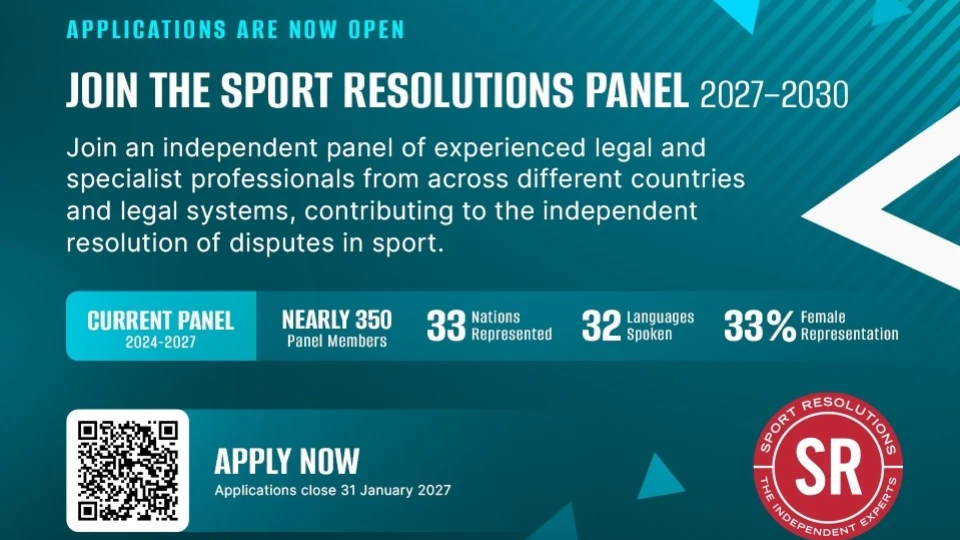
Sport Resolutions opens applications for its 2027–2030 Panel
Sport Resolutions is pleased to announce that applications are now open for its 2027–2030 Panel, with applications welcomed from suitably qualified professionals from around the world
Mon, January 14, 2019
To optimise for archiving, the original image and related documents associated with this article have been removed.
An arbitration panel has ruled in favor of taekwondo coach Jean Lopez, meaning his name has been removed from the U.S. Center for SafeSport's sanctioned list and is free to resume coaching without restriction.
Lopez had been under investigation for 3 years for sexual misconduct involving 3 women. He was declared permanently ineligible in April, but the ban was lifted and replaced by a temporary sanction in August pending the arbitration hearing, held December 27th.
Victim lawyer Steve Estey insists two of his clients, Gilbert and taekwondo champion Gaby Joslin, stand by claims that Jean Lopez raped them. "We have a decision that is veiled in secrecy and was made behind closed doors," he said in a statement. "There appears to be no transcript of the hearing…And the decision mailed to our clients contains no information as to why the decision was made to lift the ban.”
The decision comes four weeks after Lopez’s brother, Olympic champion Steven Lopez, also had his sanction lifted after winning arbitration. At the time, SafeSport said there was a "preponderance of evidence" that he sexually abused a family friend and fellow taekwondo athlete.
The Lopez brothers have always denied the allegations, but victims claim, “This is yet another example of the failure by SafeSport to protect athletes from sexual abuse.”
Sport Resolutions is pleased to announce that applications are now open for its 2027–2030 Panel, with applications welcomed from suitably qualified professionals from around the world
A decision in the case of the International Tennis Integrity Agency against Ms Jessica Eudovic has been issued by the Independent Tribunal
A peer-reviewed study by the International Testing Agency has confirmed that short-distance drone transport can preserve the integrity of anti-doping samples while significantly reducing transport times compared with road transport