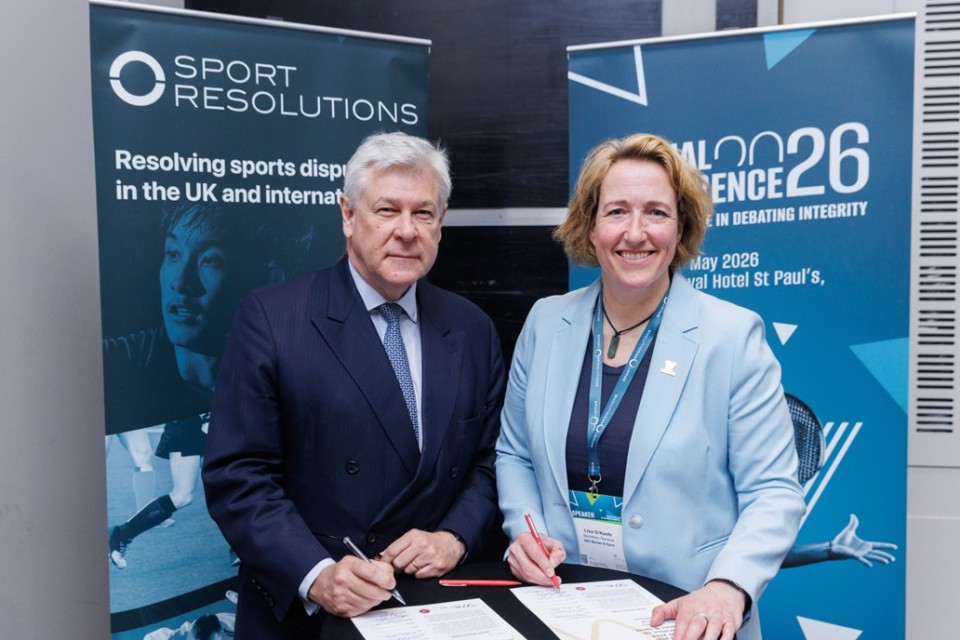
Sport Resolutions to speak at the London International Disputes Week 2024


Sport Resolutions to speak at the London International Disputes Week 2024

The London International Disputes Week (LIDW) 2024 will take place from 3 and 7 June, both in person and online. 

Sport Resolutions Chief Executive Richard Harry will be joining a panel consisting of Christopher Vajda KC (Moncton Chambers), Richard Power (Clyde & Co), Kassie Smith KC (Moncton Chambers) and Camilla Macpherson (Prime Finance). Richard Harry will discuss why arbitration is commonly used in the regulation of sport, including the role played by bodies such as Sport Resolutions. The session will examine some high profile cases, such as the Saracens salary cap breach, and consider the pros and cons of arbitration, including timeliness, cost, expertise and confidentiality in a sector with high public interest.

The panel will take place on Thursday 6th June between 9:00 and 10:30 am in person, in London. 

For more details and registration please click here

You may also like

View All

Pinned Article

Sport Resolutions Annual Conference 2026: Early Bird Tickets Now on Sale

Early Bird tickets for the Sport Resolutions 11th Annual Conference are now available. Join leading sport and legal professionals in London on 7 May 2026 for a full day of discussion, insight, and networking

Read More

Professional tennis players told to remove fitness trackers during Australian Open 2026

Professional tennis players have been told to remove fitness trackers during the Australian Open 2026 as such technology is not yet allowed at Grand Slams, although regulations may be changed in the future

Read More

FIFPRO study shows three concussions may affect attention in professional footballers

In a recent study conducted by FIFPRO, the global union for professional footballers, it showed that players who reported three concussions performed significantly worse in tasks requiring attention, such as tracking the ball and opponents, maintaining positional awareness and reacting quickly during a match, compared with those who had two or fewer concussions, sparking calls for further research

Read More