
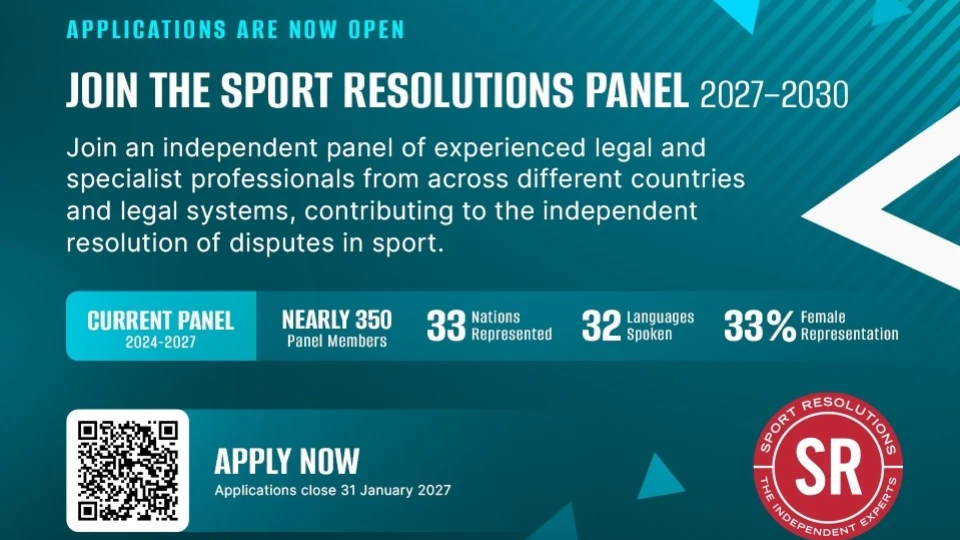
Sport Resolutions opens applications for its 2027–2030 Panel
Sport Resolutions is pleased to announce that applications are now open for its 2027–2030 Panel, with applications welcomed from suitably qualified professionals from around the world

Mon, May 16, 2022
To optimise for archiving, the original image and related documents associated with this article have been removed.
The World Anti-Doping Agency (WADA) has published the 2021 Code Compliance Annual Report.
The Report outlines the key achievements and challenges from the last year whilst also identifying areas where improvement can be made so that the global anti-doping system is as efficient as possible.
WADA’s Associate Director of Compliance, Rules and Standards, Kevin Haynes said “WADA’s 2021 Compliance Annual Report provides stakeholders with important insight and transparency into WADA’s Compliance Monitoring Program. The Report covers a unique and resource-intensive period of time for WADA and the World Anti-Doping Code Signatories; most notably, introduction of the 2021 Code and International Standards as well as resumption of compliance procedures previously frozen due to the COVID-19 pandemic. We recognize that Signatories were also required to adjust their anti-doping programs and priorities in light of the 2020 Tokyo Olympic and Paralympic Games that took place in 2021 and to comply with the Court of Arbitration for Sport (CAS) decision on the Russian Anti-Doping Agency (RUSADA).”
He added “We wish to acknowledge Code Signatories for responding to the requirements and also wish to take this opportunity to express our gratitude to the independent Compliance Review Committee (CRC) for its advice and input on identifying trends and best practice when it comes to reporting on WADA’s compliance activities.”
Some key findings include:
The 2021 Compliance Annual Report can be accessed here
Sport Resolutions is pleased to announce that applications are now open for its 2027–2030 Panel, with applications welcomed from suitably qualified professionals from around the world

Women football players are most likely to consider retiring early due to financial and mental health issues, with employment standards failing to keep pace with a boom in certain areas, as reported by FIFPRO
The Women Super League, the highest level of women's football in England, is set to receive additional investment in match officiating, with full-time referees expected to be introduced in 2029