
Wed, March 30, 2022
WADA published report on key areas of athlete vulnerabilities to doping
To optimise for archiving, the original image and related documents associated with this article have been removed.
The World Anti-Doping-Agency (WADA) has published the results of its Athlete Vulnerabilities Research Project which aimed to better understand the factors that may make athletes more vulnerable to inadvertent or intentional doping.
As part of the project 574 respondents (355 sport organization personnel and 219 athletes) provided answers to a survey which aimed to gain insight from those engaged in sport as to the types of athletes who may be more vulnerable to doping and the factors that contribute to causing vulnerability.
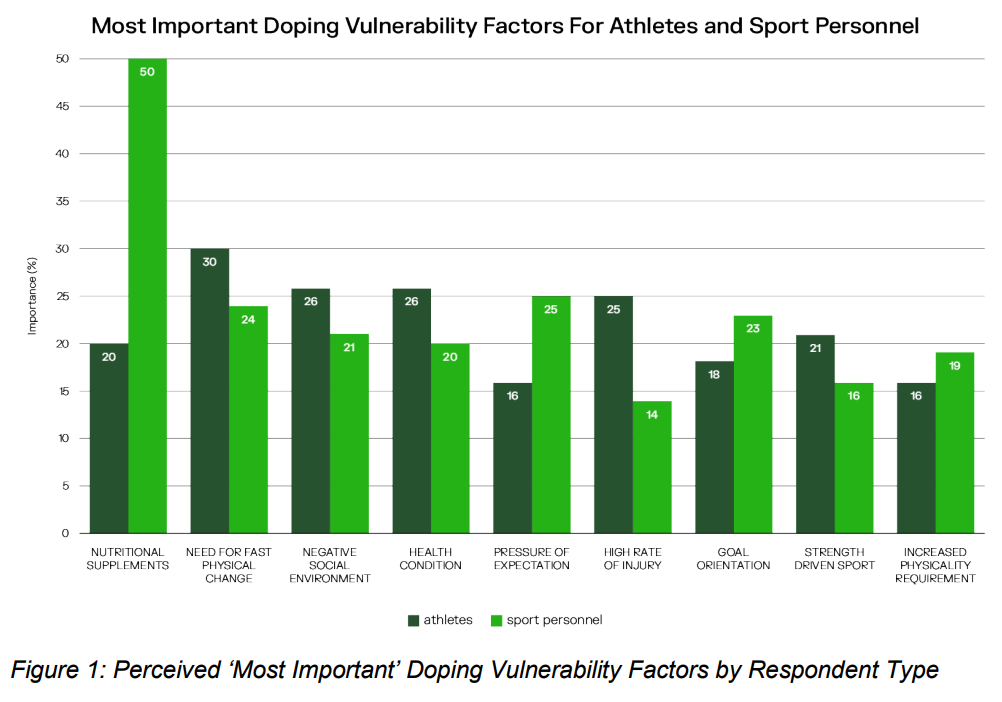
Some of the key findings included nutritional supplements being the leading area of concern for athletes with coaches being considered the most influential personnel whilst international level male athletes were seen to be those most vulnerable to both intentional and inadvertent doping.
WADA Education Director Amanda Hudson said “Our Athlete Vulnerabilities Research Project is a critical component of the priorities outlined in WADA’s 2020-2024 Strategic Plan, specifically with regard to being athlete-centered and to focus on impactful research that, when disseminated to stakeholders, is of use and actionable. Social science research is an essential part of this process, helping us to gather insight and learn more about the behaviour and realities of athletes. We know that athletes start in sport clean, but we also now know that there are times during an athlete’s career where they can become vulnerable to making poor decisions. We share this report in our efforts to share research outcomes with the clean sport community, and we are grateful to those who took the time to respond to the survey. Athlete vulnerability is something we all need to be more conscious of, investing in programs that can better protect athletes during these times.”
The project was conducted in collaboration with Canada’s Université de Sherbrooke Research Chair on Anti-Doping in Sport with Prof. David Pavot from the University saying “This is a very exciting and interesting project that has been carried out in collaboration between WADA's Education Department and the Université de Sherbrooke Research Chair on Anti-Doping in Sport. This spirit of bringing together the expertise of the University and WADA is clearly in line with the MITACS Accelerator grant we were awarded to fund this study. At the scientific level, the comprehensiveness of the study builds on previous work and provides a foundation on which to explore further the topic of athlete vulnerabilities. I hope that the public dissemination of the results will benefit anti-doping organizations around the world and researchers. I see a lot of potential in the use that can be made of this study.”

You can read the project report here.